Presentations
The ROI of Professional Presentation Design
•
8 Minutes
Most leadership teams hesitate at the same moment.
They see a proposal for professional presentation design and ask: "Is this really worth it?"
That's the wrong question.
The right question is what your current presentation approach is already costing you in delayed decisions, lost deals, and wasted executive time. Because presentations aren't a nice-to-have asset. They're the interface between your strategy and someone else's decision. And every unclear slide carries compound interest against you.
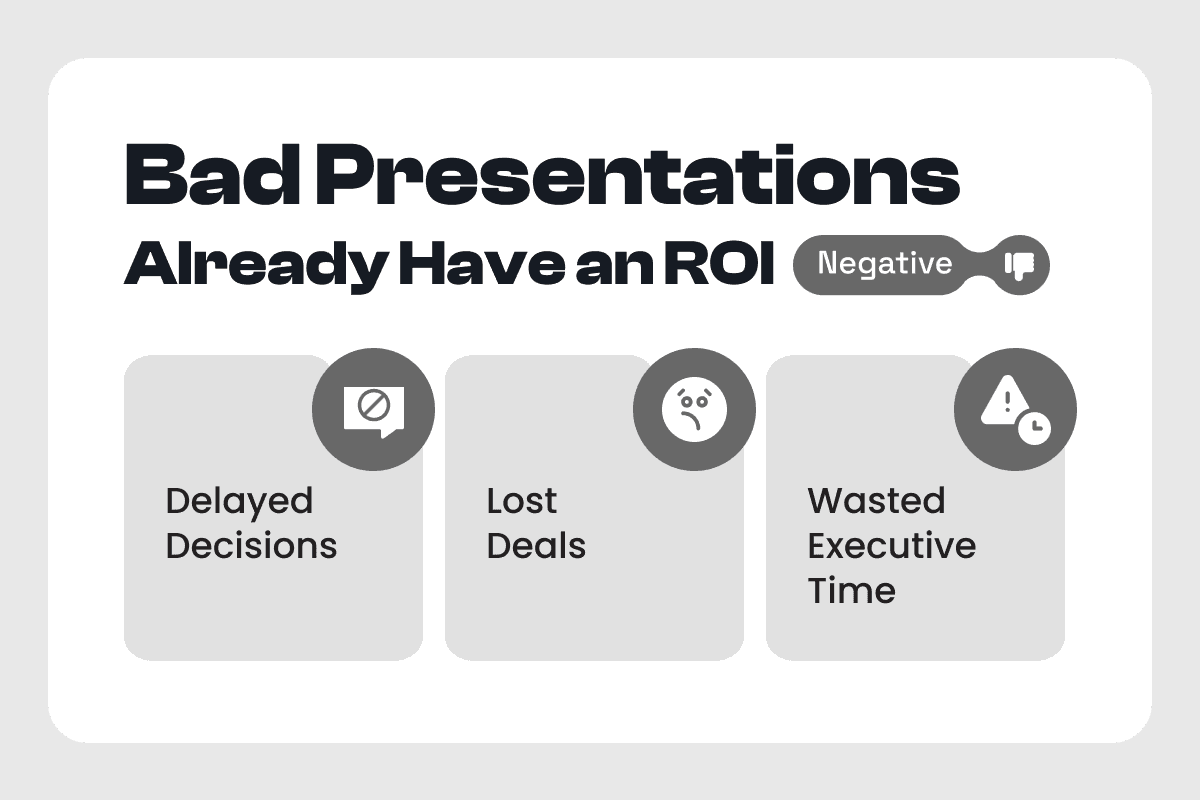
Bad Presentations Already Have an ROI (It's Just Negative)
Here's the uncomfortable truth: bad presentations don't show up as a line item. But the damage is real.
When a sales deck doesn't land, deals stall or slip quarters. Champions lose confidence making the case internally. Buying committees default to doing nothing, not because your solution is wrong, but because the story didn't hold.
When an investor pitch underperforms, follow-up meetings disappear. Valuations compress. Momentum dies quietly.
When an internal strategy deck fails to land, decisions get deferred, teams leave misaligned, and execution slows before it even starts.
None of this registers as "presentation loss." But the revenue impact accumulates. That is your baseline ROI today.
Why Design Impacts Revenue (Even When No One Talks About Design)
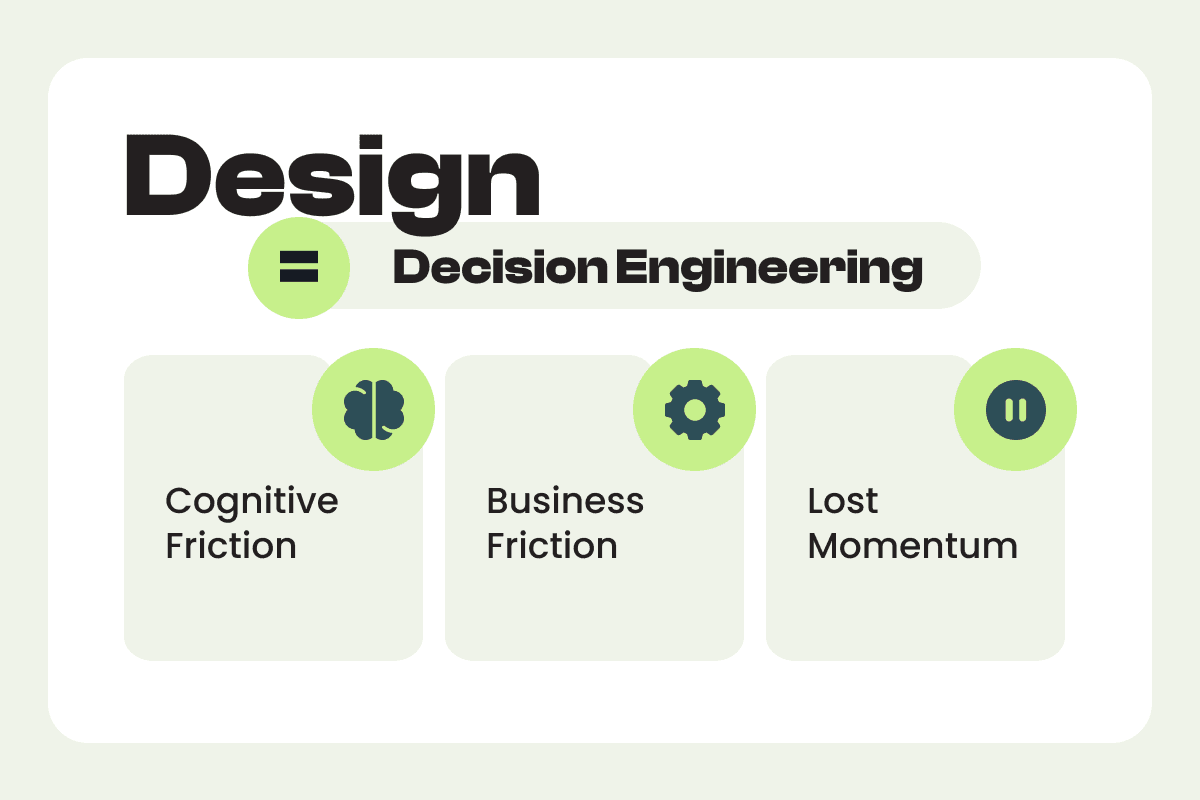
Executives don't consciously say, "I don't trust this because the slides are messy." What they experience instead is higher cognitive load, slower comprehension, and lower confidence in the recommendation.
Cognitive friction creates business friction. And friction kills momentum, which is the most fragile asset in any deal cycle.
This is what Cambridge researchers call the split-attention problem: when your audience is busy reading, cross-referencing, and interpreting competing elements on a slide, they aren't making decisions. They're doing mental integration work that your design should have already done for them.
Professional presentation design isn't decoration. It's decision engineering.
Where Presentation ROI Actually Comes From
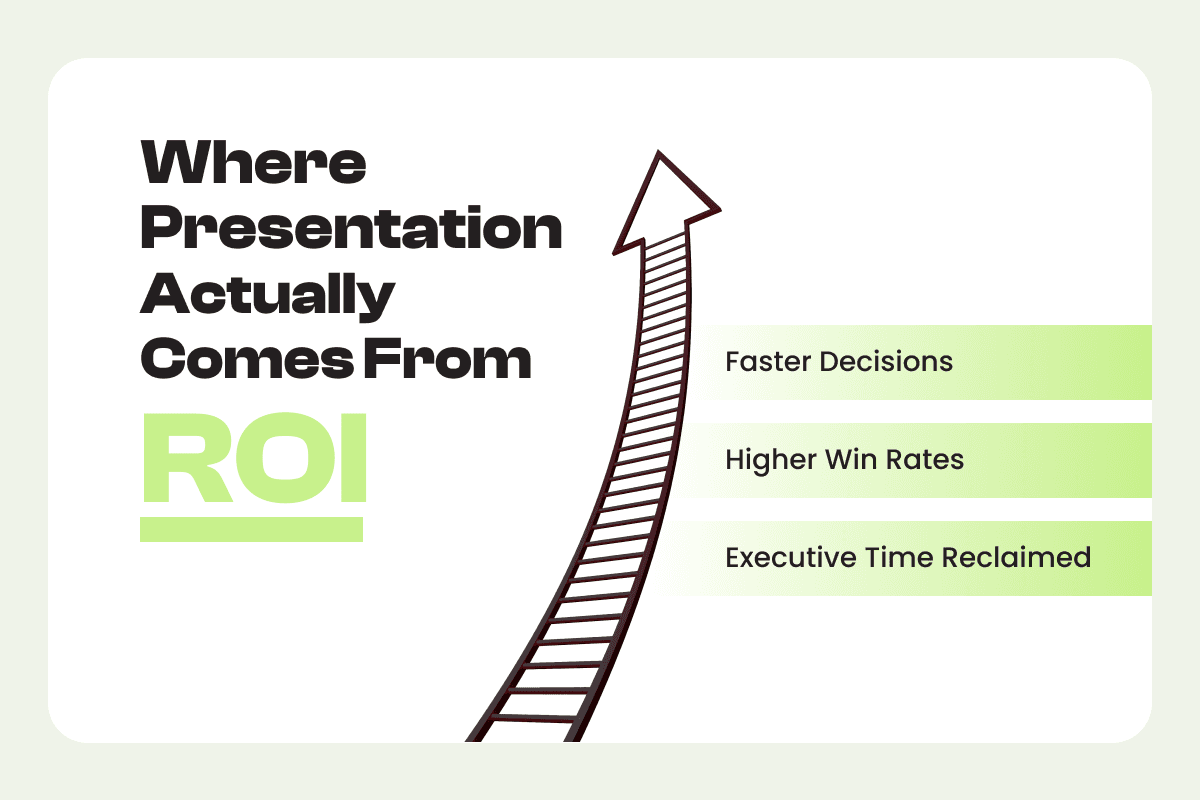
Faster decisions
We regularly see executive meetings compress from 90 minutes to 45. Not because content was removed, but because clarity was added. If your average enterprise deal involves 6 to 8 decision meetings and clear design eliminates even one, that's measurable revenue acceleration. Fewer meetings, faster approvals, shorter cycles.
Higher win rates
Clear narratives outperform exhaustive ones. Decision-makers don't reward thoroughness. They reward confidence and clarity. When presentations open with intent, structure around a decision, and surface evidence only when needed, buyers feel safer saying yes. Even a 2 to 3 percent increase in win rate at enterprise ACVs dwarfs the cost of the design investment.
Executive time reclaimed
Senior leaders are among the most expensive resources in your company. Yet many spend hours in meetings where the ask isn't clear, the story isn't linear, and the conclusion never arrives. Professional presentation systems reduce clarification questions, side conversations, and rework cycles. Time saved multiplied by executive cost multiplied by frequency equals real money.
The Hidden Multiplier: Trust
There's a variable spreadsheets miss entirely.
Visual consistency, clear hierarchy, and narrative discipline signal something to your audience before a single word is spoken. They signal operational maturity, strategic rigor, and attention to detail. Subconsciously, people are asking: if this is how they think, can I trust how they execute?
Design either amplifies trust or erodes it. There's no neutral.
A Simple ROI Calculation You Can Actually Use
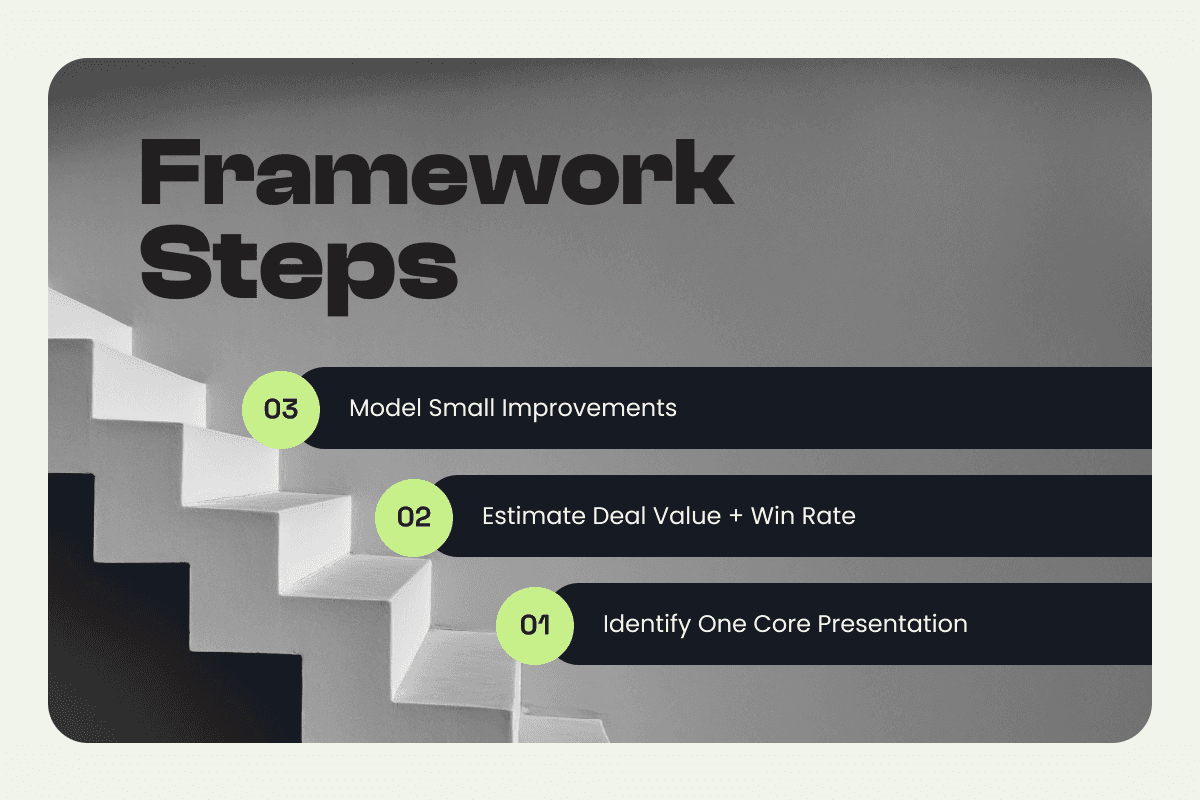
You don't need a complicated model. Start with one core presentation, whether that's your sales deck, investor pitch, board update, or strategy brief.
Estimate three things: the average deal value or budget impact it influences, your current close or approval rate, and the average number of meetings it takes to reach a decision. Then model small, conservative improvements: one fewer meeting, a 2 percent lift in win rate, a 15 percent reduction in time-to-decision.
Compare that upside to the cost of a one-time professional redesign, or a scalable presentation system built to deploy across your team.
In almost every case, the ROI comes back in multiples, not percentages. High-performing teams don't ask if they should invest. They ask where professional presentation design creates the most leverage.
What Professional Presentation Design Actually Means (At Dots)
It's not making slides prettier.
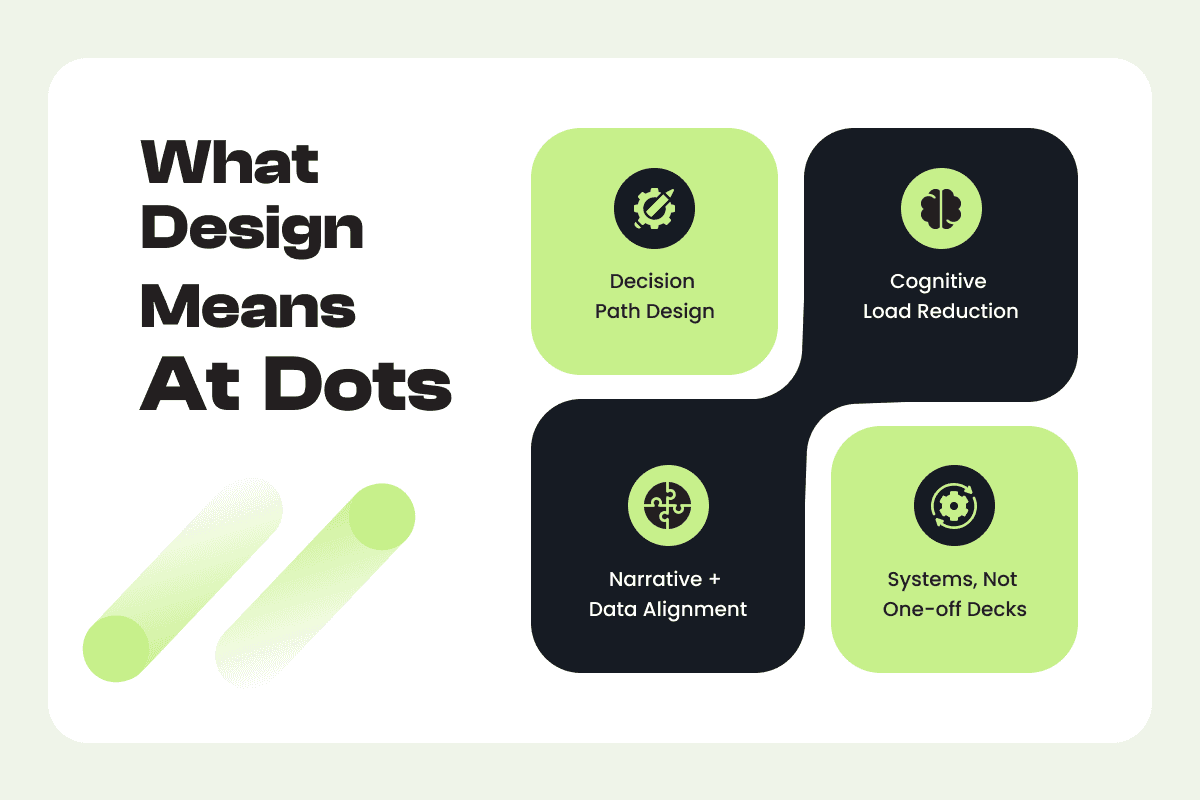
It's designing for a decision path, reducing cognitive load intentionally, and aligning narrative, data, and visuals so each element earns its place. It's building systems that scale, not one-off decks that live and die with a single deal.
That's why our work focuses on revenue impact, decision velocity, and trust at scale. Aesthetics are a byproduct of that clarity, not the goal.
Conclusion
If presentations influence revenue, and they do, then treating them as a cost center is a strategic mistake.
The hidden tax of bad presentations shows up as stalled deals, deferred decisions, and wasted executive time. The upside of getting them right shows up as faster closes, stronger win rates, and a team that can actually execute on the strategy they're presenting.
The only real risk isn't investing. It's continuing to let unclear presentations quietly drain your business.
Use our Presentation ROI Calculator or request a Deck Audit to quantify the opportunity hiding in your most important presentation.